

In recent years, the emergence of drones has revolutionized the surveying landscape, providing creative solutions that improve productivity, safety, and accuracy. Drone surveys have become as a game-changer across multiple industries, from the construction industry and land development to agriculture and eco-surveillance. Their capability to rapidly gather high-quality images and comprehensive data sets has changed traditional practices, making projects not only faster to complete but also more reliable.
As we delve into the upcoming advancements in drone surveys, it is clear that the benefits are numerous and varied. This article explores a variety of reasons to choose drone surveys for your next project, against traditional techniques and illustrating their roles across different sectors. Regardless of whether you are working in the construction sector, real estate, or agricultural planning, recognizing the benefits of these drone surveys can have a major effect on project planning and implementation. Stay with us as we reveal how drone technology is transforming how we conduct surveying and mapping, leading to improved efficiency and informed choices. Pros of Aerial Surveys
Drone surveys offer a significant benefit in terms of quickness and effectiveness. Traditional surveying methods can be manual and slow, often requiring substantial manpower and prolonged periods in the field. In comparison, drones can quickly cover large areas, collecting massive amounts of data in a much shorter of the time. This fast data collection allows for faster project turnaround and the ability to promptly adapt to changing site conditions.
Additionally, key advantage of drone surveys is their cost-effectiveness. By lessening the need for manual manpower and reducing the time spent on site, organizations can reduce labor costs and cut expenses associated with traditional surveying equipment. Additionally, the high precision and accuracy of drone surveys lead to less errors and the need for corrections, further contributing to overall project savings. This cost-related benefit makes drones an attractive for various industries such as construction, farming, and property development.
In conclusion, drone surveys enhance safety, particularly in dangerous environments. Surveying hazardous sites, such as high structures, mining operations, or emergency situations, poses risks to human surveyors. https://blogfreely.net/towninput25/unmanned-aerial-vehicles-in-operation-exactness-and-precision-in-modern can reach these areas without putting people in harm's way. This ability not only improves worker safety but also allows data collection in locations that would be difficult or not feasible to survey using conventional methods, leading to more complete and dependable project insights.
Applications in Different Sectors
Aerial surveys have quickly become invaluable across a variety of fields. In construction, they streamline project management and improve accuracy in site assessments. By capturing detailed aerial images and creating 3D models, drone surveys provide real-time data that aids in tracking progress, measuring dimensions, and identifying potential issues before they escalate. This technology boosts communication among parties involved and fosters more efficient decision-making throughout the building phase.
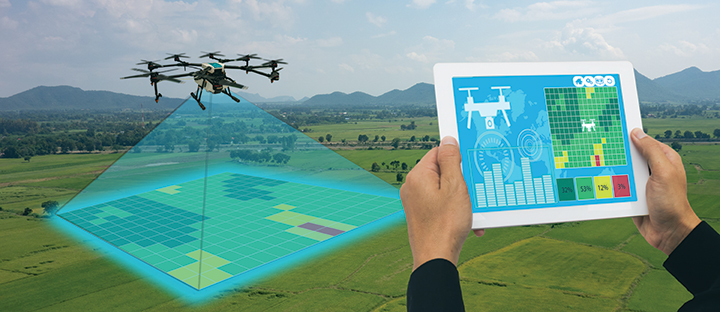
In farming, drone surveys are transforming farming practices by offering innovative methodologies for crop monitoring and land assessment. Drones equipped with multispectral cameras can assess plant health, detect water stress, and optimize input usage, leading to higher yields and more eco-friendly farming. Agricultural planners can accurately evaluate land conditions and make smart decisions that improve productivity while cutting costs, highlighting the significance of drone technology in contemporary agribusiness.
The utility and construction sectors also gain greatly from drone surveys. These aerial inspections enable quick assessments of power lines, pipelines, and roadways while enhancing safety measures during monitoring operations. Drones can access hard-to-reach areas, reducing the risks associated with traditional survey methods. Additionally, drone surveys provide essential data for ongoing maintenance planning, guaranteeing that critical infrastructure remains in top condition and enabling for timely responses to potential failures.
Future Trends in Drone Surveying
The prospects of drone surveying is set to be defined by advancements in artificial intelligence and ML. As these technologies progress, drones will become progressively proficient of processing data on-the-fly, facilitating for on-the-spot analysis and decision-making. This implies that project managers can receive instant feedback on site conditions, resulting in quicker response times and improved accuracy in planning. Drones equipped with intelligent software will streamline workflows, rendering them essential tools in sectors like construction, farming, and ecological oversight.
Another significant trend is the combination of drones with other cutting-edge technologies, such as the Internet of Things and blockchain. IoT-enabled Helpful site can gather and disseminate data with other devices immediately, enabling seamless communication and coordination among various project stakeholders. The use of blockchain can strengthen the safety and openness of drone data, enabling authentic records of surveys that can be notably useful in legal and contractual contexts. This merger of technologies will build a more interconnected ecosystem for surveying, boosting efficiency and trust.
Moreover, as regulations continue to evolve, we can anticipate to see broader adoption of drone surveys across multiple sectors. Tighter safety standards will likely drive the the creation of more targeted drones capable of functioning in challenging environments, such as city areas or catastrophic regions. The growth of commercial drone use will open up new markets and applications, solidifying drones as a key component in the next generation of surveying and spatial analysis.